
A collector's guide to the dress watch line that quietly outlived trends for two decades.
When you hear "Seiko," you probably think divers.
The SKX. The Turtle. Maybe the 6105-8110 "Willie." Sport watches dominate the vintage Seiko conversation, and rightfully so — they're rugged, iconic, and well-documented.
But there's an entire branch of Seiko's family tree that barely gets talked about. A line of dress watches with a hi-beat heart, an elegant silhouette, and a 20-year production run that outlasted most of its sportier siblings.
That line is the Seiko Chariot — and if you've never heard of it, you're not alone. Outside of one famous reference (more on that later), it's close to an information wasteland.
This guide fixes that.
Before It Was Called "Chariot": The 2559 Movement (1968) To understand the Chariot, you have to go back to what came before the name existed.
In 1968, Seiko's Daini Seikosha subsidiary developed Caliber 2559 — a 28,800 bph hi-beat, hand-wound movement with 24 jewels. On paper, that doesn't sound revolutionary. But context matters: this was the same era Seiko was pushing its "Hi-Beat" campaign across Grand Seiko and King Seiko. The 2559 brought that same engineering obsession to a smaller, simpler package.
Two hands only. No seconds. No date. Just time — delivered at a beat rate that, when you hold one to your ear, is unmistakably not a standard movement.
The 2559 originally powered Queen Seiko, Seiko's premium ladies' dress watch line (active since 1962, with earlier calibers 330, 1020, 2519A, and 2539A). But the movement found a second life in men's and unisex dress cases, driven by the era's preference for smaller, slimmer watches — particularly among Asian male buyers.
These weren't cheap. Gold-cased 2559 "Special Luxury" watches sold for 140,000 to 280,000 yen in the late 1960s, sitting alongside — and by 1970, above — an 18-karat Grand Seiko.
The 2559 Family: Four Case Archetypes.
Seiko experimented widely with case shapes across the 2559 family. Here's the breakdown:
Round Dress Watches (33mm) References like the 2559-0180 and 2559-0181 are the most wearable survivors today. Slim cases, often in steel or gold-tone, with linen or basket-weave textured dials. The "24 JEWELS" printed on the dial wasn't bragging — it was standard practice at the time, and all 24 are functional. These watches also carry a micro-regulator for fine rate adjustment.
Tank/Square Watches (29.5mm × 29.5mm) The 2559-3010/3019 (the two numbers likely represent different export markets for the same design) is probably the reference you'll encounter most. Crosshair dials, horizontal indices, silver and blue variants. Often found on original mesh bracelets — which, unlike many vintage Seiko bracelets, are genuinely comfortable. A gold-tone version exists as the 2559-3189.
Elongated Tank & Tonneau Watches (25mm × 38.3mm) The 2559-7019 is the standout here. Curved, ergonomic cases that wrap the wrist. Blue sunburst dials are common; a rare marbled red variant exists that may be a limited edition. The 2559-7040 and 2559-7010 round out this cluster.
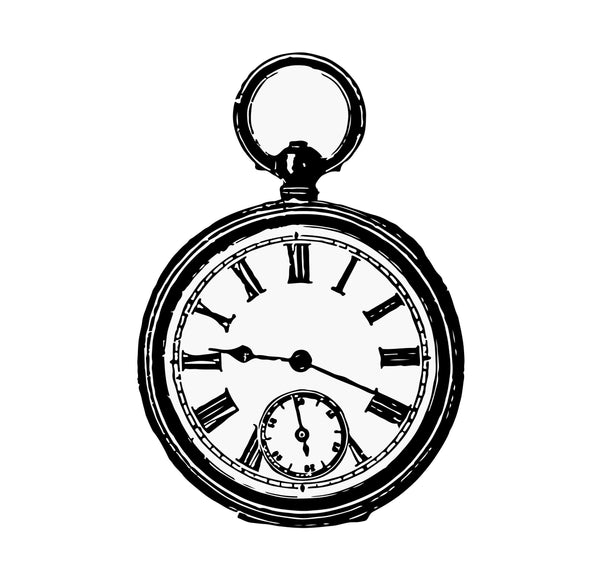
Pocket Watches (30–36mm) Yes — Seiko put a hi-beat movement into pocket watches in 1968, when the format was already declining. References 2559-0160 (hammered case finish, sunburst dials with Arabic numerals) and 2559-0170 (linen dials with Roman numerals) are the best documented. These are genuinely rare.
The Chariot in Summary
The Seiko Chariot is what happens when a company known for engineering excellence turns that same obsession to a quiet, unglamorous format. No rotating bezels. No 200m water resistance. No chronograph subdials. Just hi-beat precision in cases that were genuinely ahead of their time — tank, tonneau, square, round — produced across two decades and largely ignored by the collecting world.
At Goh Vintage Watch, we hunt for well-preserved Chariots across the 2559 and 2220 families. Each piece is authenticated by reference number and movement caliber before listing. Browse our current vintage Seiko collection at gohvintagewatch.com.
Disclaimer: This article is for educational and collecting purposes. Always verify reference numbers and movement calibers before purchasing vintage watches.